🤲🏻 The Power of Crying Out in Corporate Prayer
[The following reflection was first sparked by an experience I had seven years ago while joining a Korean church prayer mission—see the original story here]
Scripture is filled with urgent, vocal, even desperate cries to God. The psalmists “cry out” (Psalm 130:1; 142:1), Hannah pours out her soul with weeping and loud prayer (1 Samuel 1:10–16), Jesus Himself “offered up prayers and supplications with loud cries and tears” (Hebrews 5:7), and the early church lifted their voices together in united, loud, and public petition (Acts 4:24). Silent prayer and contemplative stillness certainly have their place—Jesus often withdrew to pray alone—but the dominant biblical pattern is unmistakable: God’s people cry aloud to Him, often together, often with intensity.
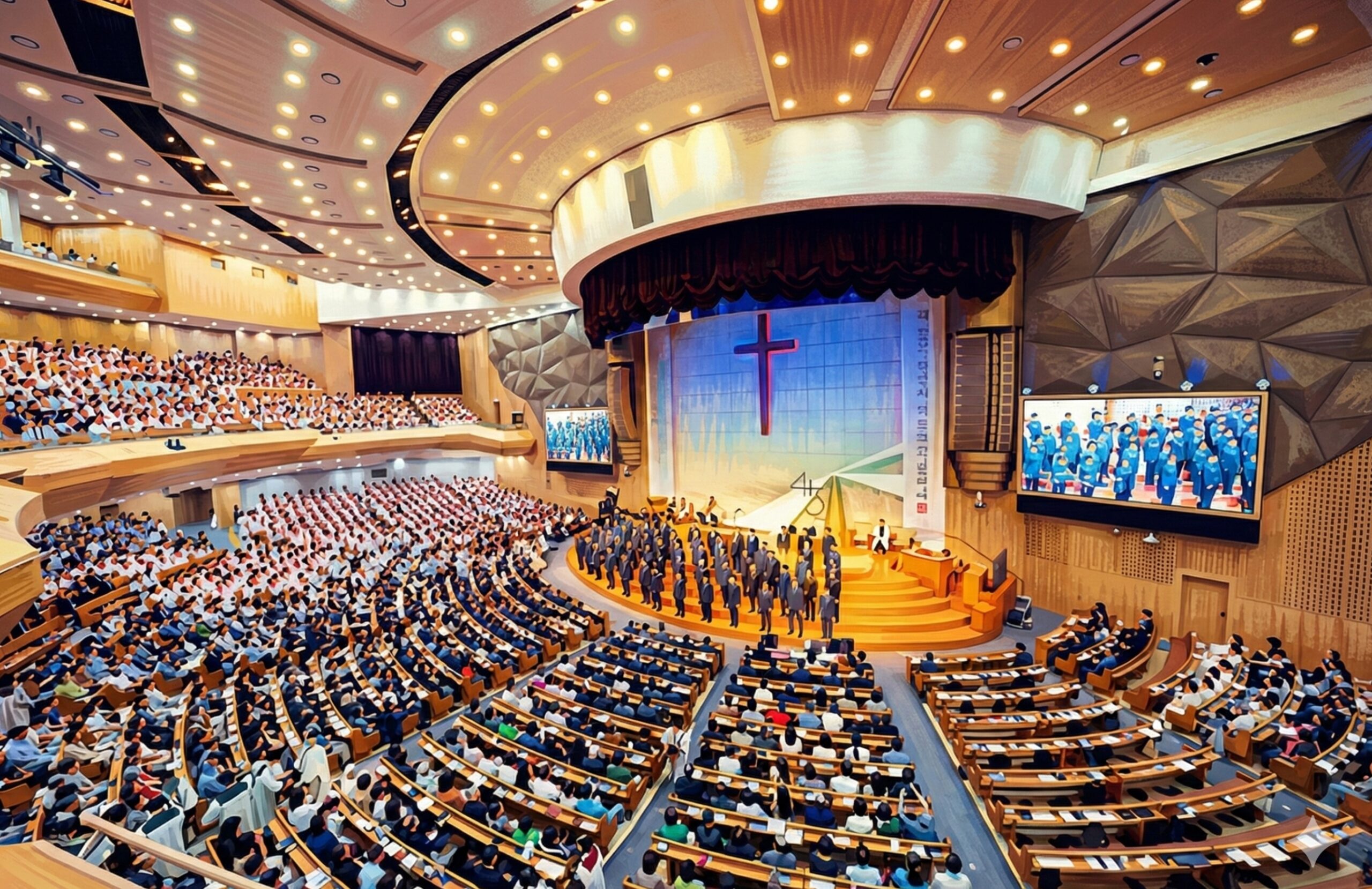
In many evangelical Korean Protestant churches, this biblical pattern has been preserved in a practice known as 통성기도 (tongseong gido), literally “praying with one voice” or “simultaneous audible prayer.” At a given signal, the entire congregation begins praying out loud at the same time. The room fills with hundreds of voices—some pleading, some thanking, some confessing, some interceding—rising simultaneously to heaven. It is chaotic to Western ears, but it is also electric with faith and expectation.
By contrast, most Western evangelical and mainline churches practice what might be called “sequential” corporate prayer: one person prays aloud while everyone else listens quietly and says “Amen” at the end. This method has real strengths. It is orderly (1 Corinthians 14:40), it edifies the whole body as believers hear one another’s hearts, and it teaches people how to articulate prayer. By letting the church hear one another’s prayers, we can train up younger believers in how to put their longing into words.
But it also has limitations. It can become performance-oriented, overly polished, or even stifled. Rarely does it reach the raw, Spirit-breathed intensity we see in Scripture.
Neither form is the “only right way.” Korean-style simultaneous prayer can degenerate into mindless noise if people are just repeating phrases or showing off volume. Western sequential prayer can become cold and powerless if it lacks heart.
But to never practice the crying-out-together form at all—to treat it as somehow sub-biblical or culturally inferior—is, I believe, a serious loss for the Western church. Something shifts in the heavenly places when God’s people open their mouths and cry out to Him with one accord.
A Biblical Door-Opener: The Triple Cry
Many Korean prayer meetings begin with the 주여삼창 (chooyeo samchang)—the leader and the congregation calls out “주여!” (CHOO-yeo! = “O Lord!”) three times in perfect unison, getting louder each time. By the third corporate roar, the atmosphere changes; faith rises, tears flow, and people begin pouring out their hearts in simultaneous prayer.
This practice is consciously modelled after Daniel 9:19–20, where Daniel pleads:
“O Lord, hear! O Lord, forgive! O Lord, listen and act! Do not delay for Your own sake, my God…”
Daniel 9:19
I have tried many times to replicate this in English-speaking settings by having everyone shout “O Lord!” three times. It usually falls flat. People feel awkward, the sound is thin, and the spiritual temperature barely moves. But the moment we switch and have everyone shout the Korean “CHOO-YEO!” three times together—suddenly the room ignites. Shoulders loosen, voices gain boldness, and the sense of God’s nearness becomes palpable. I have seen it happen repeatedly, even with people who do not speak a word of Korean.
Why does the Korean word work when the English translation does not? Part of it is phonetic: “CHOO-YEO” is sharp, guttural, and carries farther than the softer English “O Lord.” It also allows for a continued cry, unlike the sudden stop at the ending of the word “Lord”.
Perhaps part of it is cultural momentum—Korean believers have decades of spiritual history and expectation invested in that cry. But I suspect there is also something deeper: the sound itself has become a trigger, a holy reflex, that signals to the spirit, “Now we are entering the throne of grace together with boldness.” (Hebrews 4:16)
Going back to the prayer of Daniel, in the Hebrew, Daniel repeats אֲדֹנָי (Adonai) three times in rapid succession, followed by imperatives. The urgency is almost breathless. The transliteration of the sound would be roughly:
“A-do-NAI, sh’ma! A-do-NAI, s’lach! A-do-NAI, hak-shi-VA va-a-SEH…”
Jewish tradition sometimes vocalizes the divine name replacement אֲדֹנָי with a strong stress on the final syllable, giving it a piercing, arrow-like quality when repeated. Korean believers, consciously or not, have captured something of that same piercing onomatopoeic intensity with “CHOO-YEO!”
Deeper Biblical Roots for Crying Out, “Abba!”
Scripture gives us multiple precedents for intimate, vocal, childlike crying to God:
- Galatians 4:6 – “Because you are sons, God has sent forth the Spirit of His Son into your hearts, crying out, ‘Abba, Father!’”
The Spirit Himself prompts us to cry (Greek κρᾶζον) “Abba”—an Aramaic word of raw familial intimacy, the equivalent of “Daddy.” - Romans 8:15 – We have received the Spirit of adoption “by whom we cry out, ‘Abba, Father.’”
Again the verb is κράζομεν—we cry out. - Romans 8:26 – The Spirit helps us in our weakness because we do not know how to pray as we should, and He intercedes with “groanings too deep for words” (or inexpressible groanings). Corporate crying-out prayer often releases these very groanings in audible form.
- Psalm 130:1 – “Out of the depths I have cried (qārāʾtî) to You, O LORD (Yahweh).”
The verb qārāʾ is the standard Hebrew word for crying aloud, shouting, or calling with a loud voice.
When hundreds of believers cry out together—whether in Korean, English, tongues, or wordless groans—the sound becomes a corporate “Abba!” that ascends like incense before the throne.
A Plea to the Western Church
We do not need to become Korean to recover biblical corporate prayer. We do not need to abandon sequential prayer or times of silence. But we do need to make regular space—perhaps once a month, perhaps in small groups, perhaps at the end of a Sunday service—for the congregation to open their mouths and cry out to God together. Start with a simple “Abba, Father!”, or even the Korean “CHOO-YEO!” if that strangely works better. Then let the prayers flow simultaneously for five or ten minutes.
You will be amazed at what happens. Tears come unbidden. Faith is contagious. The sense of God’s fatherly presence becomes overwhelming. And the spiritual atmosphere over a church, a city, or a nation can shift in ways that polite, turn-taking prayer alone rarely achieves.
The Bible is littered with exhortations—and living examples—of God’s people crying out. Let us not mute the cry of the Spirit in our gatherings. There is a time to whisper, and there is a time to roar together: “Abba! Abba! Abba!”