🍻 What Happened at St Edmundsbury Cathedral
Years ago, a cousin who had backpacked through Europe gave me advice I’ve never forgotten: don’t just wander from place to place as a tourist—pick a theme and let it structure your travel. You’ll see more, remember more, and come away with something that actually means something.
That stuck with me. So a few years back, our family adopted a mission: visit an Anglican cathedral in every British city we travel to, attend a service there, witness the ancient Christian heritage of this country, and pray for the Church of England. We’ve now done roughly 20–25 cathedrals this way. It has been one of the most meaningful ongoing practices of our family life.
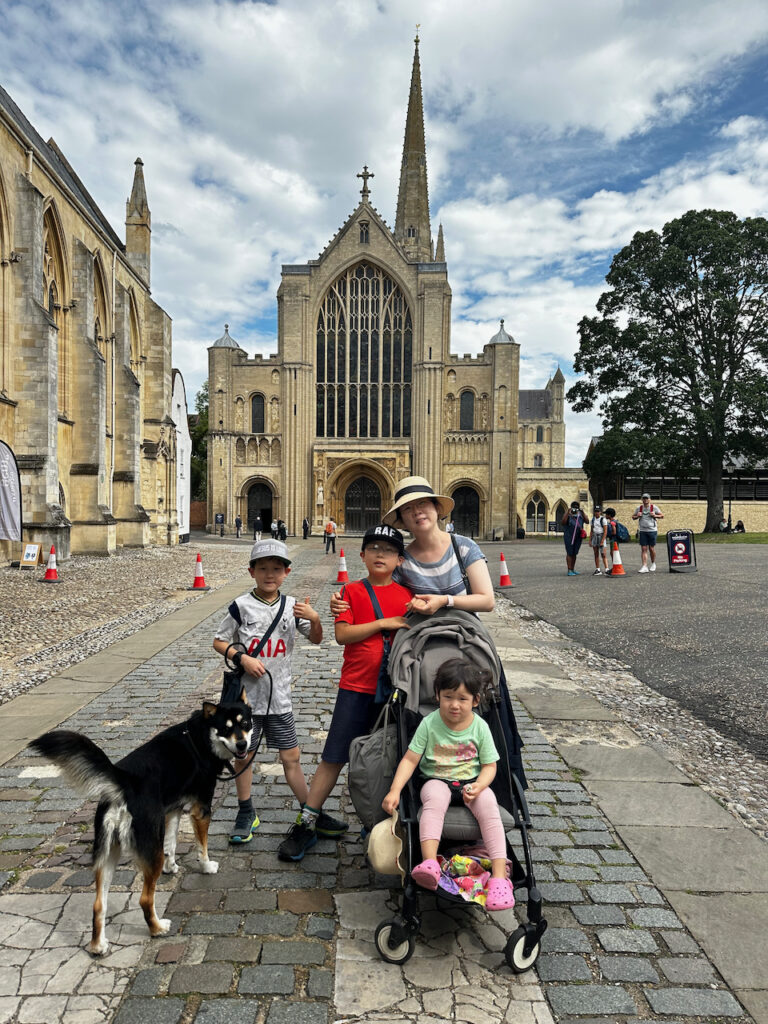
This summer we spent four days around Norwich. Every morning we attended the 7:30am morning prayer at Norwich Cathedral—a glorious way to begin each day. On the final Saturday, we made a slight detour on the way home to stop at Bury St Edmunds, a town with one of the most distinctive names in England, to visit St Edmundsbury Cathedral.
St Edmund himself was a king who ruled the East of England from 855 to 869 AD. When Viking invaders captured him and demanded he renounce his faith in Christ, he refused and was beheaded—a martyr. In his honor, the Bury St Edmunds Abbey was established around the 10th century, becoming one of the great pilgrimage sites of medieval England, drawing enormous wealth, influence, and power. That power eventually poisoned it—chronic conflict with the townspeople, riots, fires, slow decline—until Henry VIII dissolved it in 1539. The ruins are still there. In 1914, the adjacent St James’s Church was elevated to cathedral status, becoming St Edmundsbury Cathedral, which stands to this day.
We arrived in town to find it in the middle of the 31st East Anglian Beer and Cider Festival. People were moving through the streets in cheerful groups, pint in hand. Fine—none of our business. Or so I thought.
We walked into the cathedral.
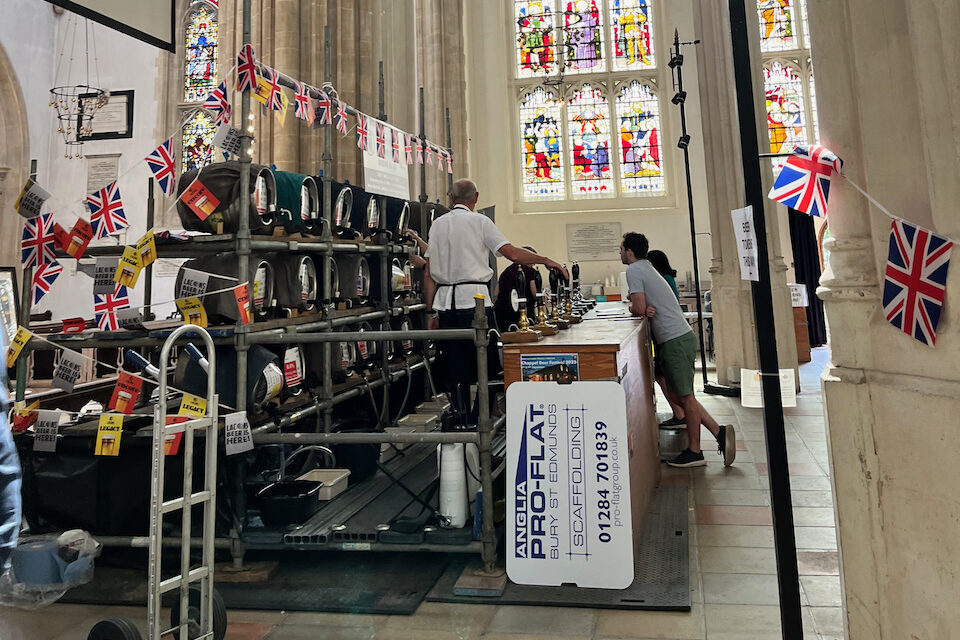
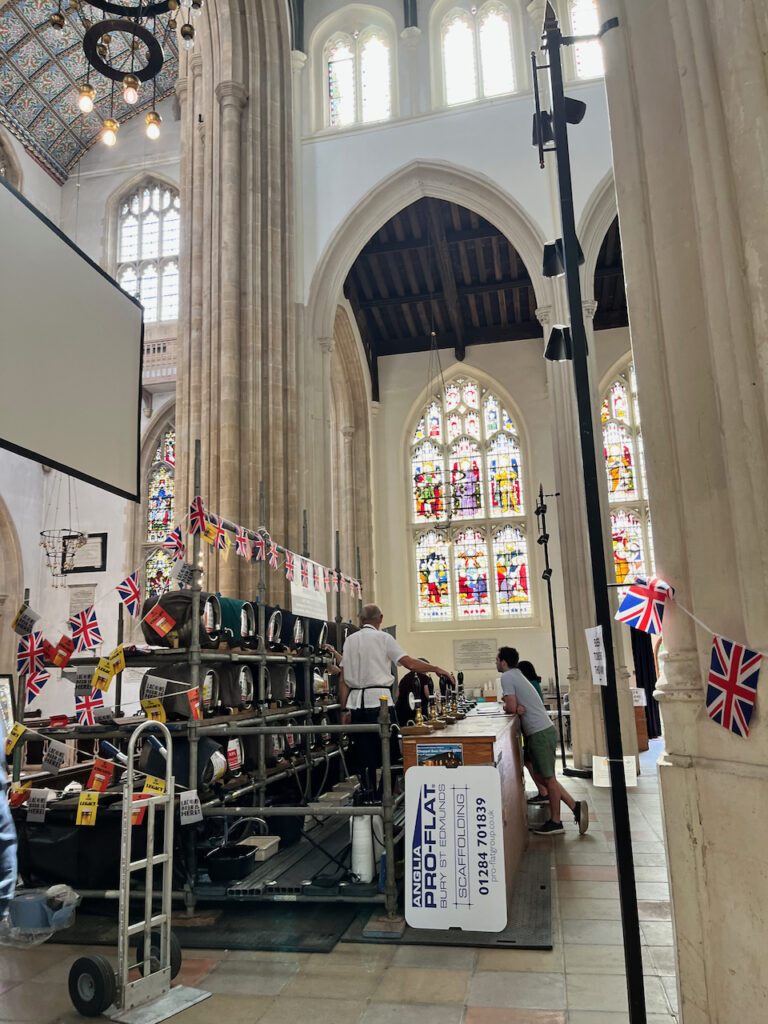
The central sanctuary—the nave where people worship, where prayers have been offered for centuries—had been stripped of its pews and filled with hundreds of barrels of beer and cider. Bar counters were set up. People sat and drank inside the house of God.
My first instinct was to go quietly. This is just British culture, live and let live, pick your battles. I started walking toward the exit.
Then the smell hit me—that sharp, yeasty, unmistakable smell of alcohol—and something in me could not move on.
I stepped up onto one of the tables and I spoke:
“Ladies and gentlemen—I am a visitor from London. I cannot leave this place in good conscience without saying this: this is the holy house of God. It is a house of prayer for all peoples. If you want to drink, the garden outside is right there. Our God is slow to anger—but He is not a God who never grows angry. Repent, with fear and trembling.”
Within moments, two security guards arrived and escorted me out.
On the way out, I told them calmly why I had done it. I quoted Acts 4:12—
“Nor is there salvation in any other, for there is no other name under heaven given among men by which we must be saved.”
Acts 4:12 (NKJV)
—and tried to share the gospel with them. One of the guards stopped me and said: “I know that verse. I know there’s no other name, no other salvation. I’m a believer too.”
So I asked him directly: I’m passing through—I can’t follow this up myself. But would he please escalate this to the right people? Would he make sure this didn’t happen again? He listened carefully but gave me no firm answer.
Our God is slow to anger. He is merciful, patient, long-suffering. But a God who never grows angry? That is not the God of Scripture—that is an idol of our own comfort-seeking imagination. Many believers today have confused God’s patience with God’s indifference, and they have grown comfortable in that confusion.
We need to know the wrath of God as Scripture actually reveals it. Not to be paralyzed by fear, but because the fear of the Lord is the beginning of wisdom—and without it, we will not take holiness seriously. Our own or anyone else’s.
Lord, have mercy on the Church in England. Have mercy on me—for every part of my own life that grieves You. Hear us. Forgive us. Pour out once more upon this nation a spirit of grace and supplication, a hunger for You, a holy trembling before Your name.