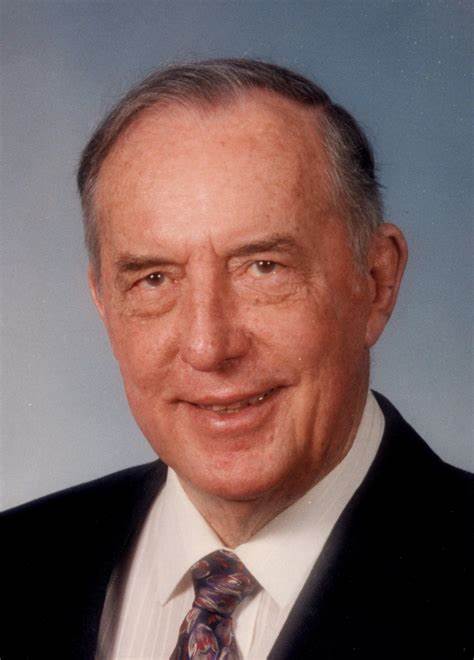
🕊️ Derek Prince: A Life Poured Out
I have recently found myself unexpectedly grateful that I speak English at a native level. The reason is simple: Derek Prince’s sermons are all available online, in English, and I can take them in without a filter. That is how much this man has shaken me. He is, to put it plainly, one of the most remarkable human beings I have ever encountered through any medium.
Here is a brief account of his life.
Derek Prince was born in 1915 in India, the son of a high-ranking British Army officer. As an only child, he was sent to England at age five and given the finest education his world could offer: King’s Scholar at Eton, then King’s Scholar (full scholarship) at King’s College, Cambridge, where he studied classical philosophy. He grew up nominally Anglican, hearing Scripture read aloud in church every week—yet completely without faith. His teenage and university years were marked by rebellion and pleasure-seeking. He traveled to Monte Carlo with friends to gamble. He read all of Plato’s writings in the original Greek (Platonic thought was the subject of his Cambridge fellowship thesis) and found no truth there. He turned then to Eastern philosophy and Indian yoga, pursuing various spiritual experiences. Still nothing.
When World War II broke out, Prince was conscripted into the British Army as a private. He took a Bible with him—out of purely academic curiosity. He read from Genesis through Job and felt nothing. Then one night, moved by an impulse he could not explain, he opened the Psalms and began to pray. What followed was an encounter with the living Jesus that would change everything.
Through the night, the Holy Spirit led him through deep repentance—he wept—and then, gradually, something shifted. A quiet laughter began. It grew. He could not stop it. He wept and laughed at the same time until sleep overtook him.
He woke up a different man. The profanity that had been second nature to him—especially the casual misuse of Jesus’ name—had vanished. Gone. He had no desire for alcohol. The great realization that settled over him was this: Truth is not a philosophical system. Truth is a Person. Truth is Jesus Christ.
After that, Prince was deployed to North Africa, where he spent seven years in the African desert. He used that time to read the Word, practice it in daily life, and train himself to hear the Holy Spirit’s voice. During that period, the Spirit told him to fast every Wednesday—one full day every week—and he kept that discipline for the rest of his life. He preached to fellow soldiers, prayed for the sick in Jesus’ name, and saw men saved—including, remarkably, a Muslim brother in that region who came to faith and was baptized.
In the final year of his military service (1945–46), stationed in Egypt, he heard about a Danish missionary named Lydia Christensen who was running an orphanage in what was then Palestine. She was a Salvation Army worker, unmarried, twenty-six years his senior—the same age as his own mother—and she was raising eight adopted children: six Jewish, one British, one Arab. Prince began praying for her, and God spoke to him clearly: “I have joined you under the same yoke and in the same harness.”
In obedience, he requested a transfer to Palestine.
At this moment Prince faced one of the defining choices of his life. Before the war, he had been elected to a Cambridge Fellowship—what we would today call a funded two-year postdoctoral position. Cambridge wanted him back. A distinguished academic career was waiting.
But God spoke again, with a calling that made the Cambridge chair look small: “I have called thee to be a teacher of the Scriptures, in Truth and Faith and Love, which are in Jesus Christ—for many.”
He put down the fellowship and married Lydia in 1946. At twenty-nine years old, he became overnight the husband of one woman, the father of eight daughters, and the head of a household of ten. By any conventional measure, it was the worst possible position from which to become “a teacher of the Scriptures to many.” There was barely enough for daily bread and shelter. Yet God was faithful. Around this time, the Lord impressed on Prince the principle: Watch what you put into your heart. From that point on, he was extraordinarily selective about what he read—only the Word and carefully chosen devotional literature, such as the journals of John Wesley. He largely stopped reading secular newspapers and general fiction. Not as a rule—as a conviction.
When Israel’s War of Independence erupted in 1948, the family escaped Jerusalem on May 14—the very day before the war officially began—and flew to England as the new state of Israel was being born. As he walked the streets of Jerusalem in those final days before evacuation, Prince experienced something that would mark him for life: passage after passage of Scripture lit up before him, and he saw, in the geography of that city, the sweep of God’s entire redemptive plan across all of human history. It was a vision he never forgot. Decades later, he would build a home in Jerusalem and spend the last twenty years of his life living there for six months of every year. He died there in 2003 and is buried there.
The family settled in London, where Prince spent seven years in ministry—including open-air preaching at Hyde Park’s Speakers’ Corner twice a week, gathering anyone who responded into a house church in his attic. Then God called him to Kenya, where he served as principal of a seminary for five years. In Kenya, he witnessed firsthand what corporate fasting and prayer can do to a nation. The country had been blanketed in Islam and animist witchcraft; through sustained prayer and fasting, an Assemblies of God revival swept through and the spiritual atmosphere of the entire country began to shift. During this season, all his daughters were married off into believing homes—and he and Lydia adopted one more child: a nine-month-old African girl.
A furlough year of itinerant ministry through churches in Britain and Canada eventually led Prince to the United States, where he was embraced by Pentecostal networks and began teaching across the country and eventually around the world. It was here that his deliverance ministry took shape. He had struggled personally with depression his entire life—something inherited through his family line. Now he recognized it for what it was: not a personality trait but a spirit. He held onto Joel 2:32—
“And it shall come to pass that whoever calls on the name of the LORD shall be saved.”
Joel 2:32 (NKJV)
—and commanded it to leave. He described the sensation as a kind of heavenly vacuum descending and drawing the thing out of him. It never returned.
His first wife Lydia died in 1975 after thirty years of marriage. Three years later, he married Ruth, and they began every morning of their twenty-year marriage with communion together. He lived in remarkably good health until his death.
Throughout his ministry, Prince challenged both sides of the evangelical world. Pentecostal and charismatic churches, he said, had experience without depth; traditional evangelical denominations had doctrine without openness. Both were missing things the Bible plainly teaches: the reality of demonic oppression and the authority of Jesus’ name to break it, the blessing and curse lines that run through family generations, the God-designed role of the father in the home, the power of fasting and prayer, and God’s unrevoked covenant purposes for the Jewish people and Jerusalem.
He wrote more than fifty books, translated into over a hundred languages. His radio ministry—Derek Prince Ministries—continues to reach people around the world with his recorded teaching. In China, he is known as 叶光明 (Yè Guāngmíng), and his teaching is so well-translated that many Chinese believers assume he must have been Chinese himself.
He died in Jerusalem in 2003 at the age of eighty-eight, having lived to see more than a hundred grandchildren born to the children he had adopted and raised. He blessed each one.
His calling, in his own words: “Reaching the unreached, teaching the untaught, and touching the untouched.”
He did exactly that.