🎮 Faithfulness, Not Brilliance
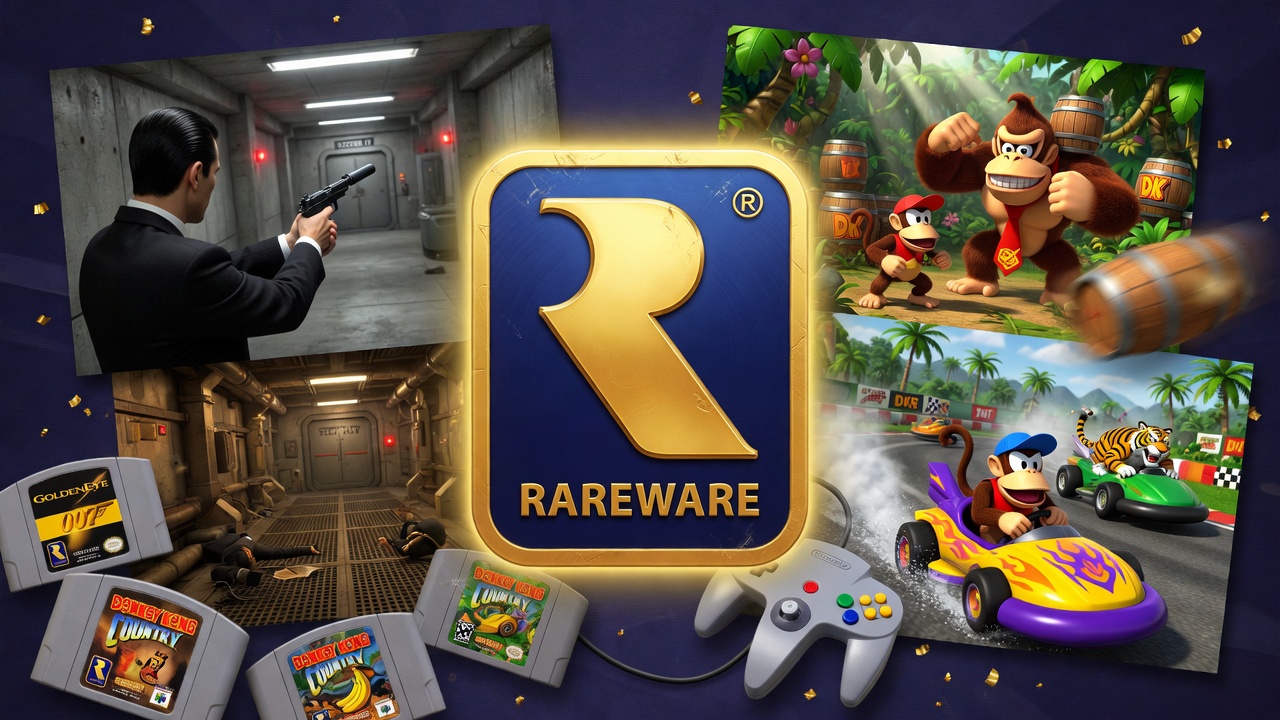
Rare could do things almost no one else could. They reverse-engineered hardware, made Donkey Kong Country look like a next-generation machine on last-generation silicon, and delivered GoldenEye when first-person shooters on consoles were still a question mark. When the conditions were right, they produced work that felt singular. That is the Rare in the name: scarce, exceptional, hard to copy.
The problem was the other ninety percent of the work. Everyday deliverables. Launch windows. The unglamorous obligation to ship something usable when the calendar said so, not when inspiration arrived. On the N64 they had enough parallel teams that one delay could still be covered by another title. By the GameCube generation that buffer was gone. Nintendo handed them an early development kit and waited for a system-seller. What they got, after converting Dinosaur Planet into Star Fox Adventures, was a late game and then silence. Nintendo’s own launch lineup was thin. A drought followed. George Harrison later said it plainly: that hurt them. Rare’s share of Nintendo’s software revenue collapsed from 9.5 percent to 1.5 percent in a single year. Nintendo looked at the numbers, declined to match Microsoft’s bid, sold its stake, and walked away. Microsoft paid $375 million for the studio that had once been Nintendo’s insurance policy.
Unpredictability is not a victimless eccentricity. Someone else pays the interest.
That is why, in the actual market rather than the highlight reel, consistency outlasts brilliance. Activision and EA have been easy to mock for years: sequels, annualised franchises, risk-averse polish, the industrial production of “good enough.” They ship. They hit dates. They do not require the stars to align. Over decades that boring faithfulness compounds. The studio that can be counted on to deliver the expected thing on the expected Tuesday eventually owns more of the calendar than the studio that occasionally produces a masterpiece and frequently produces a miss.
The same logic is older than any console generation. It is how one King regards His servants.
“Let a man so consider us, as servants of Christ and stewards of the mysteries of God. Moreover it is required in stewards that one be found faithful.”
1 Corinthians 4:1–2
The mysteries are the gospel—the treasure held in jars of clay. The vessels are ordinary. The requirement is not that the steward be dazzling, original, or inspired on every occasion. The requirement is that he be found trustworthy with what was entrusted to him. Faithfulness, not brilliance, is the criterion.
“But we have this treasure in earthen vessels, that the excellence of the power may be of God and not of us.”
2 Corinthians 4:7
Most of the work of any serious calling is not the masterpiece. It is the Tuesday deliverable, the unspectacular sermon, the code that simply works, the report that arrives on time and does not surprise anyone. The person who can only produce when motivation, conditions, and talent all coincide is a luxury item. Organisations, churches, and households cannot be built on luxury items. They are built on people who keep showing up and handing over what was asked of them. Rare’s tragedy was not that they lacked genius. It was that genius without predictability became a liability the moment the partner needed a reliable hit instead of another legend. Nintendo learned the expensive way that it could not afford to be in business with a Rare. Better to be the consistent steward than the brilliant exception. The former lasts. The latter, however dazzling, eventually leaves someone else holding the empty launch window.
The Master is coming. May we all hear Him say to us:
“Well done, good and faithful servant; you were faithful over a few things, I will make you ruler over many things. Enter into the joy of your lord.”
Matthew 25:21