🍇 The Primocane Years
A Christian Reflection on the Blackberry Bush
Every July, when I go hunting for blackberries in the English hedgerows, the same thing happens. I push my hand gently toward a cluster of ripening fruit, and somewhere between me and my prize is a long, green, whip-like cane. It has no berries. It has only thorns. It arches out into the path, snags my sleeve, and generally behaves as though it exists for the sole purpose of frustrating me. I find myself wishing it gone.
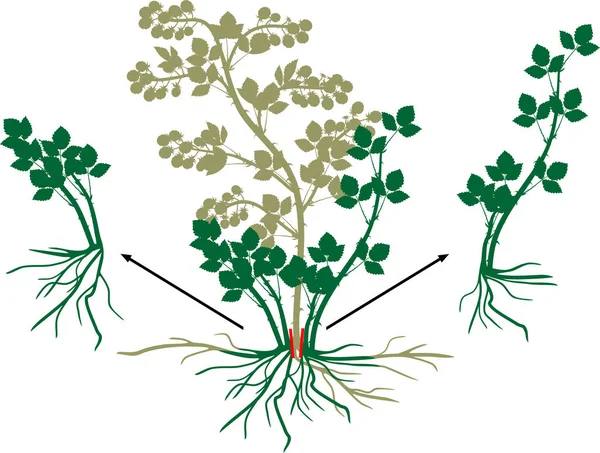
That cane is a primocane — a first-year shoot. The blackberry’s roots and crown are perennial, living for many years, but its canes are biennial, living only two. In its first year, a cane is vegetative: it grows fast, explores, stretches out, and bears no fruit. In its second year, hardened and woodier, it becomes a floricane: it flowers, sets berries, gives up its harvest in mid to late summer, and then dies back. Next year’s primocanes are already pushing up beside it as it fruits. The plant is, at any given moment, living in two years at once.
Knowing this rearranges the way I see the bush. The cane I resent is not a mistake of the plant. It is the plant’s future. Without the primocane’s reckless reaching out, there would be no floricane next year, and no berries the year after that. The organism that refuses to send out primocanes is an organism that has decided to stop living. It will shrink in on itself, stop exploring, and eventually wither. The awkward, fruitless, inconvenient growth is in fact the condition of next year’s sweetness. What looks like waste from my side of the hedge is, from the plant’s side, the entire hope of the harvest to come.
And I wonder, when I look at my own life, which kind of year I am in.
There are floricane seasons — seasons when the fruit is visible. The marriage is settled, the work is bearing, the prayers are being answered in ways people can see and taste. Everyone gathers round and is fed. These are good seasons, and they are meant to be good. But there are also primocane seasons — seasons when all the growth is outward and green and apparently pointless. Seasons of study, of moving, of caring for small children, of illness, of waiting, of learning a new calling, of a friendship being slowly built, of repentance that has not yet borne visible change. In these seasons we feel like the cane in the hedgerow: in the way, thorny, producing nothing anyone can pick. We look at our lives and wish the awkward growth were gone, so we could get on with the berries.
But the vine dresser sees differently. In John 15, Jesus says that his Father is the gardener, that every branch in him that does not bear fruit is taken away, and every branch that does bear fruit is pruned so that it may bear more. It is a sobering passage, and it is tempting to read it as though only the fruiting branches are loved. Yet the whole point of a gardener — the whole point of a God who plants and tends rather than merely harvests — is that he knows what a cane is for in each of its years. He is not surprised by the primocane. He did not plant the bush expecting berries in month one. He knows that this year’s reaching is next year’s harvest, and that a plant which only ever tried to fruit, and never stretched, would soon have nothing left to offer at all.
So we need to hold two things together. We need to take seriously that God expects fruit — the passage is clear, and the Christian life is not a permanent deferral of any real change into an always-future someday. A life that is perpetually primocane, perpetually preparing, perpetually exploring and never yielding, has misunderstood the vineyard. But we also need to take seriously that fruit comes in its season, and that the seasons before fruit are not failures. The quiet years, the green years, the years of growth that no one applauds, are not the absence of God’s work. They are often the shape of it.
What this asks of us, I think, is twofold. First, a kind of patience with ourselves and with each other that does not mistake a primocane season for a wasted life. When a friend is in a long stretch of invisible growth, our job is not to demand berries from them. It is to recognise that the vine dresser is at work in the reaching as well as in the ripening. Second, a kind of honesty: to ask which season we are actually in, and to live faithfully inside it. In a primocane year, faithfulness looks like stretching outward in obedience, letting God take us into new territory, enduring the thorns, trusting that this is not for nothing. In a floricane year, faithfulness looks like yielding the harvest — actually giving the fruit away, letting ourselves be picked from, not clinging to what we were only ever meant to hold for a season.
And underneath both, the same quiet fact. The roots are perennial. Christ is the vine; we are the branches; and whatever year the cane is in, the life that runs through it is not its own. The floricane does not fruit by its own strength, and the primocane does not reach out by its own strength either. Both are being carried by a life they did not generate and cannot sustain. Our job, in either season, is simply to abide — to stay joined to the vine, and to let the gardener decide what this particular year is for.
Next July, when I am back in the hedgerow and a green, fruitless cane snags my sleeve, I hope I will remember. The bush is not failing me. It is telling me the truth about how life that eventually bears fruit actually grows. And I hope I will be a little gentler — with the bush, and with the people around me, and with the primocane years of my own life that I would so often rather skip.