📖 Can You Write a Book You Have Not Read?
Can you write a book that you have not read?
That is not a riddle. It happened to me this month.
At breakfast on Wednesday 7 October 2026 a question landed on me and would not leave: how many promises of God are there in the Bible? Has anyone actually counted them? Has anyone catalogued them in a readable way for the curious believer?
“…by which have been given to us exceedingly great and precious promises, that through these you may be partakers of the divine nature…”
2 Peter 1:4 (NKJV)
The “if” most Christians never read
I already knew part of the answer. From Derek Prince I had learned that an enormous number of God’s promises are conditional—they carry an “if” and a “then.” And the mistake countless Christians make is that they read the “then,” get excited, and never go back to meet the “if.” Then they wonder why the blessing never arrives. It is not a divine mystery. It is a condition left unmet.
So the first half of this book is built on exactly that shape. Promise after promise, laid out in If and Then. (My notes on his fasting teaching work the same way—God’s promises are not decoration, they are mechanisms.)
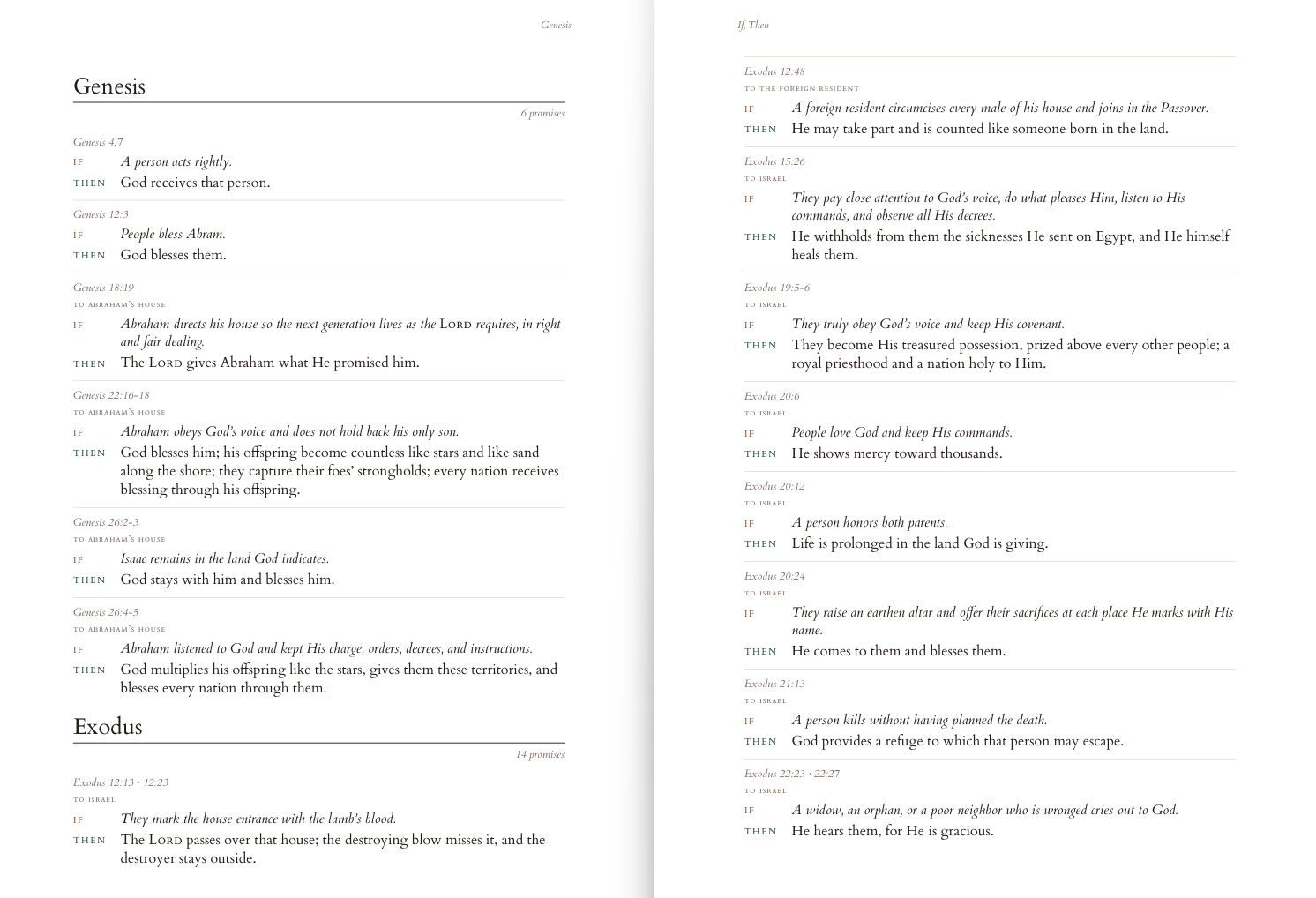
The first spread of the book. Genesis and Exodus—twenty conditional promises, every one of them carrying its condition and its recipient.
One morning, one machine
I asked the LLM to take the full Bible text and work through every verse systematically. All 1,189 chapters. All 31,102 verses. I gave it concrete examples to anchor the pattern—especially the passages that contain no “if” and no “then” anywhere in the sentence, and still function as conditional promises. Those are the ones no keyword search will ever surface.
Grok 4.7, high effort. The machine I have been rooting for understood precisely what I was asking. Then it went away, spun up its subagents, and worked.
Less than an hour later it came back with a manuscript.
I was shaken. It was good. Not good for AI—good. I sat reading promises I had never noticed, and I was blessed by my own draft.
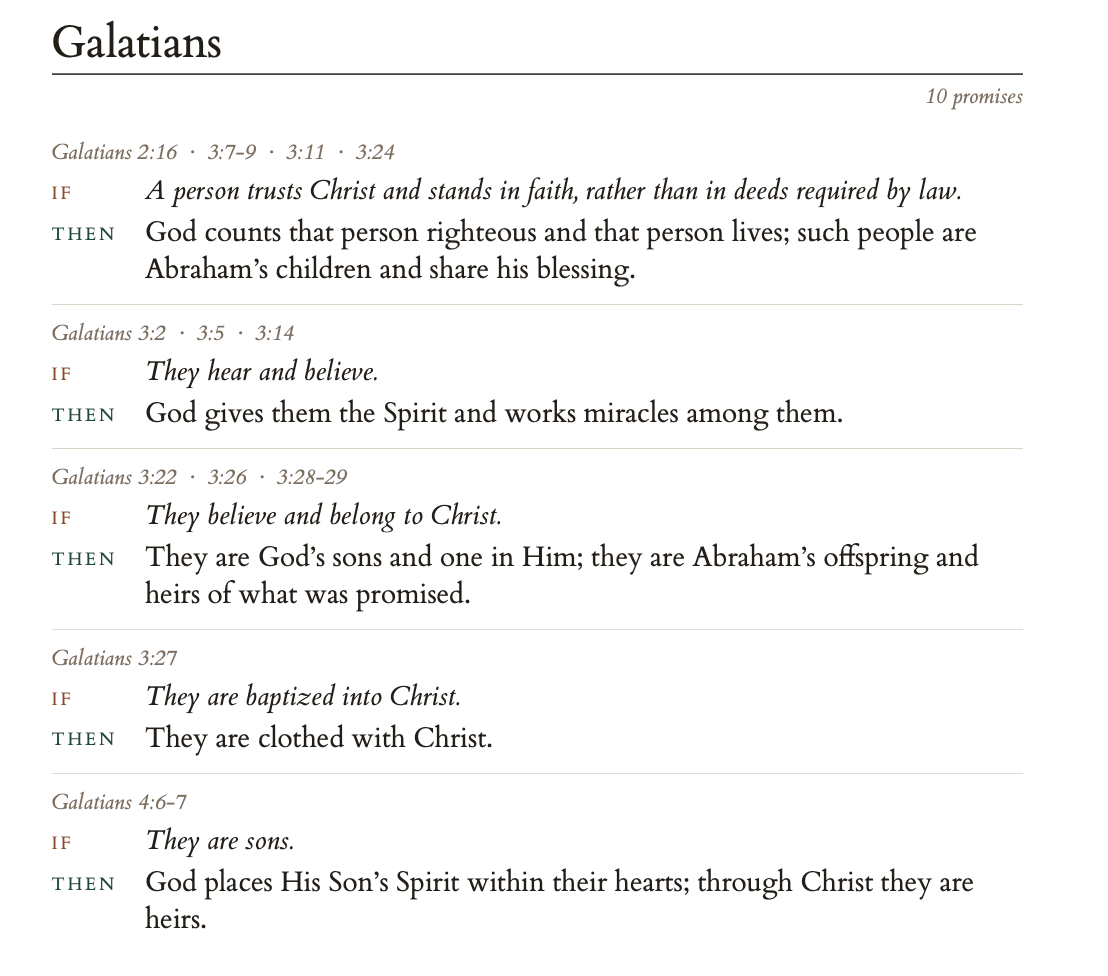
Galatians. Ten promises—and the first of them folds four separate verses into a single If and a single Then.
Then the next thought arrived, obvious in hindsight: what about the promises with no conditions at all? The ones where God simply declares what He will do—no “if,” nothing required of me, nothing but a Father’s intent toward His children. That became the second half: I will.
I have built Bible tools before. Nothing has ever been this fast.
Zero commentary—on purpose
There is no commentary from me in this book. It is a compilation, and in places a re-phrasing, of the Bible’s own text, sorted by whether the promise is conditional or unconditional.
That is the feature, not the bug.
I do not need my voice in front of that Voice. “For the word of God is living and powerful, and sharper than any two-edged sword” (Hebrews 4:12, NKJV). “So shall My word be that goes forth from My mouth; it shall not return to Me void” (Isaiah 55:11, NKJV). If that is true—and it is—the last thing this book needs is me explaining it.
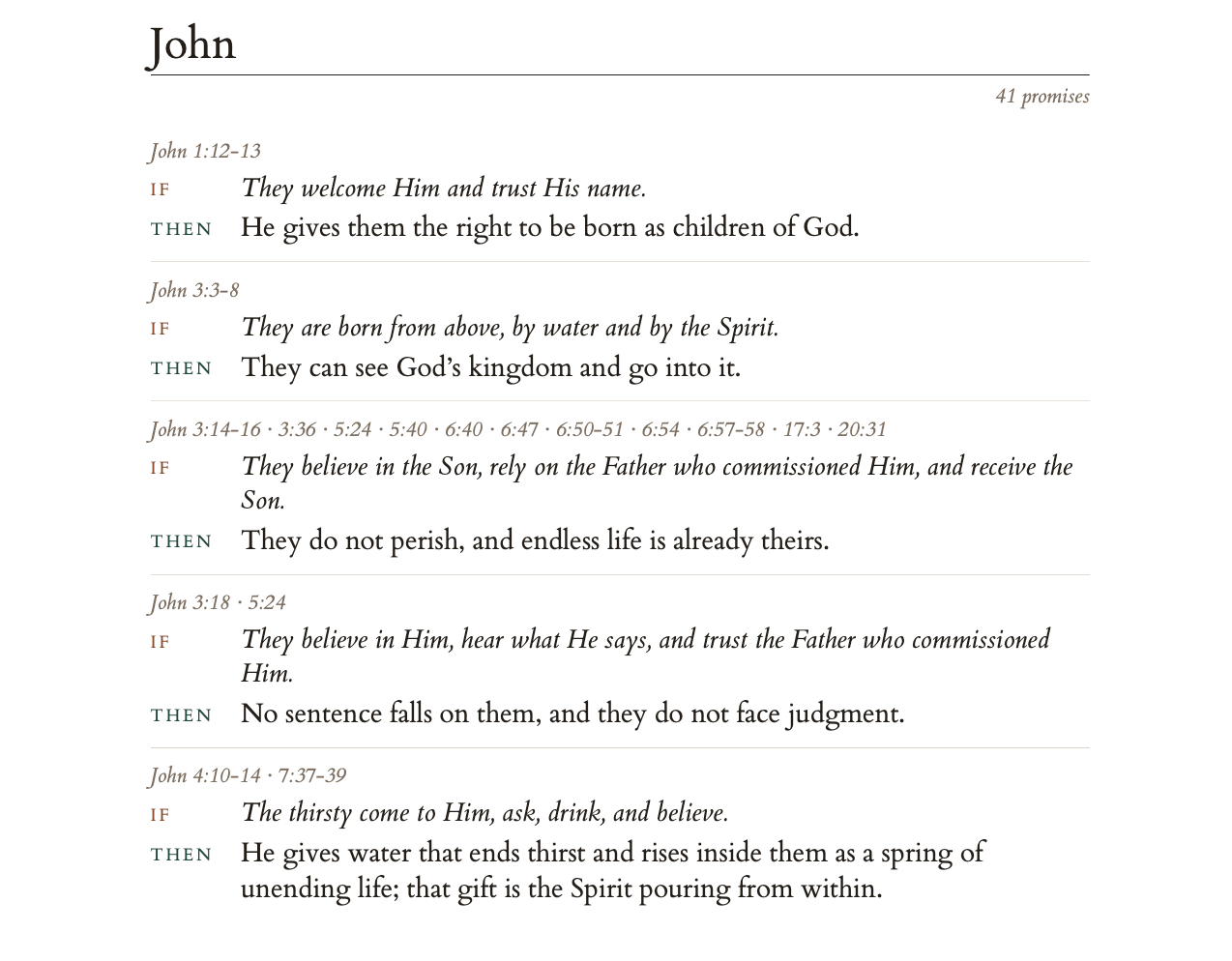
John. Forty-one promises. Believe—and do not perish. The text does the work; the compiler stands aside.
So it is a companion, not a replacement. Not a shortcut. Not a substitute for your Bible. It is an invitation to open your Bible—the same instinct behind the stripped-back Bible app I built in February: four passages a day, no clutter, nothing standing between you and the text.
Which means when you read a promise here, do what the Bereans did: “They received the word with all readiness, and searched the Scriptures daily to find out whether these things were so” (Acts 17:11, NKJV). Search the passage. Read it in context. Test it.
Church is Church. Israel is Israel.
One more decision. Wherever the context of a passage made it obvious, I labelled the recipients of the promise. Church is Church. Israel is Israel. Those are not the same address, and I will not pretend they are. As with all things, the author’s theology shapes the book—and I was not willing to smuggle in Replacement Theology by silence. That doctrine has done incalculable damage, and it sits quietly among the subjects the modern church would rather not name. If a promise was made to Israel, this book says so.
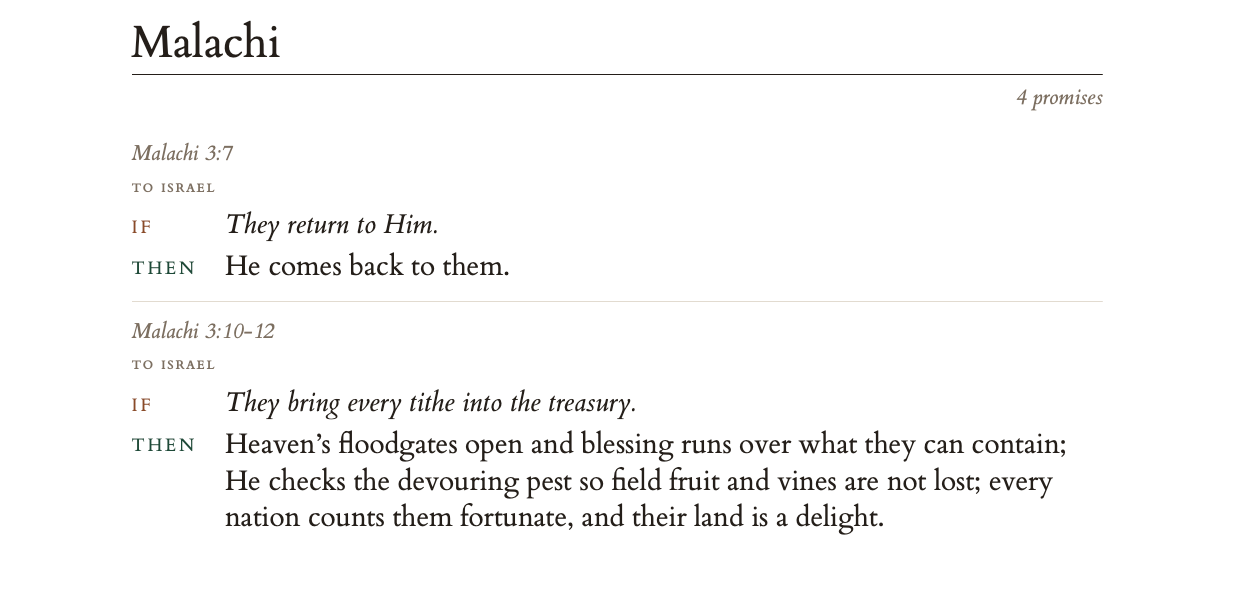
Malachi. Four promises, and every one of them is marked TO ISRAEL. That is not decoration. That is the address.
The proof
The manuscript came in a morning. The cover design took longer. That is roughly the ratio you would expect.
This afternoon a parcel arrived: my author copy, ordered from Amazon like any other reader’s. I have not put it down since.
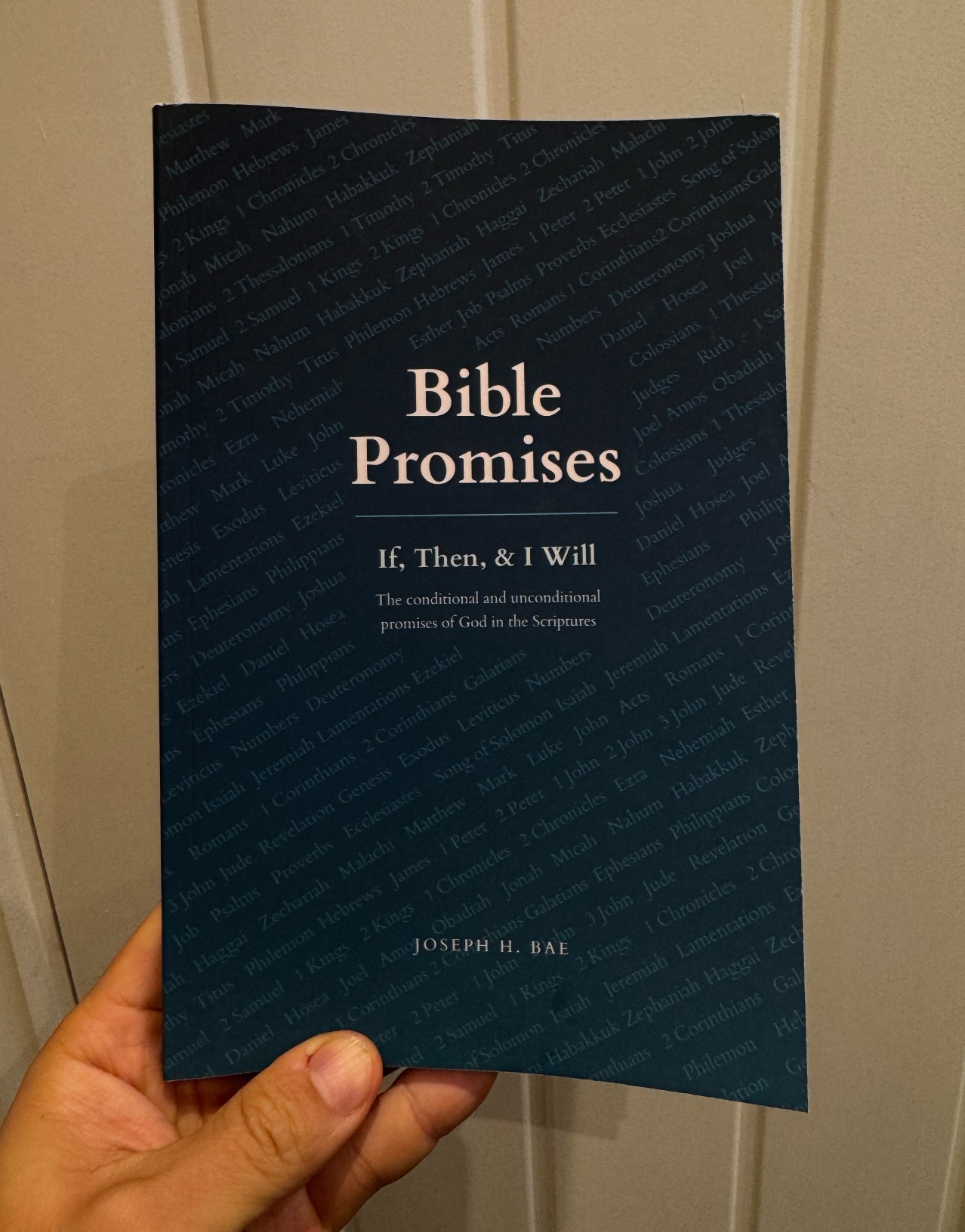
Held in my hand—13 October 2026, the day the first physical copy arrived.
Sixty-six book names stamped faintly across a dark green cover, Genesis to Revelation. Inside, 1,189 chapters and 31,102 verses sorted into If, Then, and I will, every conditional promise carrying its condition and its recipient. I wrote it on a Wednesday morning. I am holding it on a Tuesday afternoon. Six days.
“I rejoice at Your word as one who finds great treasure.”
Psalm 119:162 (NKJV)
I have launched software. I have shipped apps. I have built companies. I have never once held in my hands a book that did not exist six days earlier.
The floor
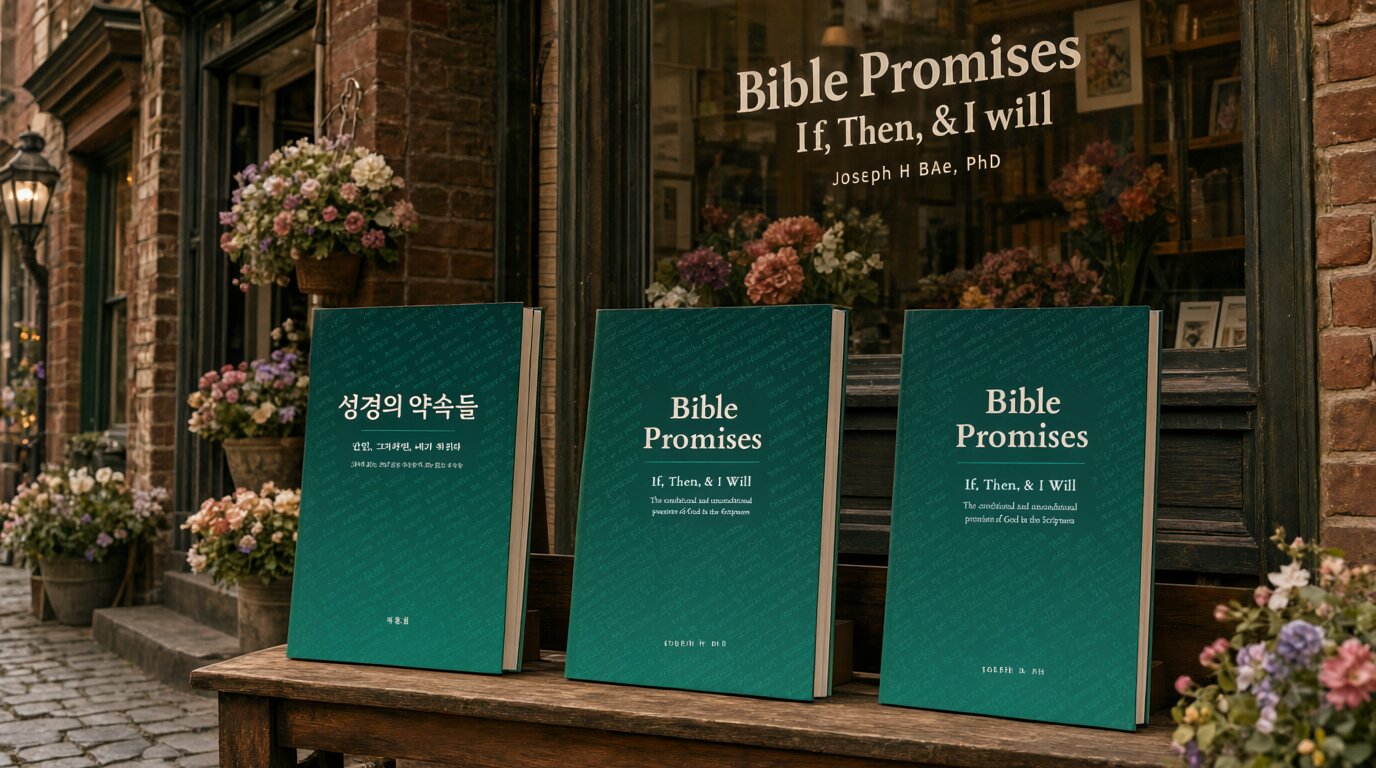
The book is called Bible Promises: If, Then, & I Will. It is on Amazon now — paperback and ebook.
I set the price to the floor. Amazon takes its cut first, and only then is the printing cost taken out of what remains—after the cut, not before. A penny lower and I would be paying for every copy sold. So the English edition is as cheap as a paperback can be made, and I earn close to nothing on it. That is deliberate. I would rather you had the promises than that I had a margin.
It is not my first time at this either. Three etymology volumes went up on Amazon in quick succession in September, so I already knew where the floor was.
The Korean edition needed a different road. Amazon KDP does not publish in Korean—the same wall that stopped the Korean editions of those three books. So I formed a publishing house: Maranatha Harpazo. (Maranatha: our Lord, come. Harpazo: the catching away.) The Korean book went to IngramSpark instead, and it is with their review team now.
What a time to be alive.
Maranatha. Come, Lord Jesus.